
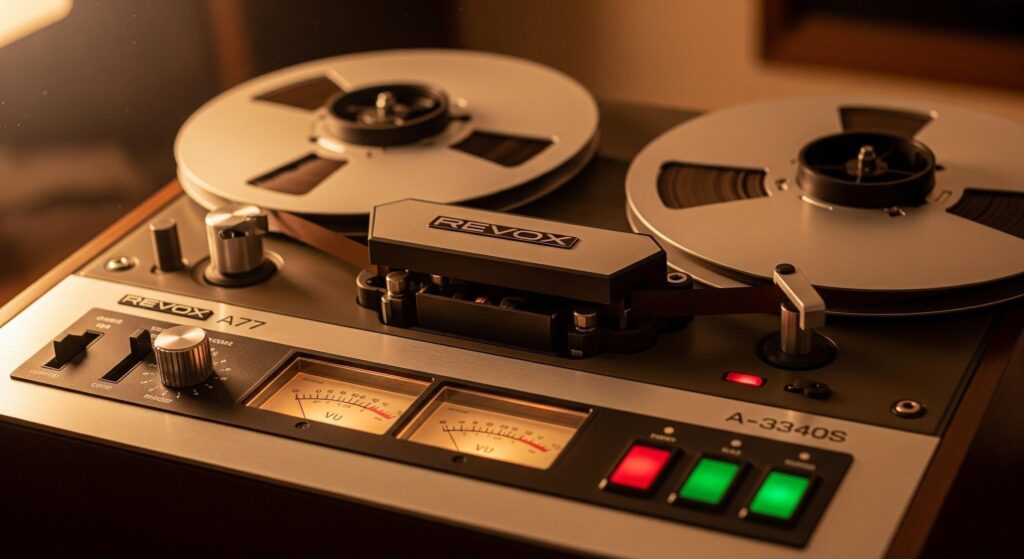
Vintage audio recordings, ranging from wax cylinders to magnetic tape, hold invaluable historical and cultural information. They capture the voices, music, and events of the past with a fidelity and immediacy that written records often lack. However, these artifacts are inherently fragile and susceptible to decay. The pressing question for archivists and historians today is: how do we effectively safeguard these historical sound collections for future generations? This exploration delves into the essential methods and significant challenges involved in maintaining these irreplaceable cultural assets. The goal is to ensure that these sonic snapshots remain accessible and audibly clear, securing their place in the collective memory.
Why Archiving Vintage Audio is a Race Against Time
The clock is ticking for many historical sound recordings. The physical materials themselves—the vinyl, the lacquer, and the tape—are chemically unstable and degrade over time. Magnetic tape, a common format from the mid-20th century, is particularly vulnerable to a condition known as “sticky shed syndrome,” where the binder holding the magnetic particles deteriorates and becomes gummy. Other threats include environmental factors like humidity fluctuations, temperature extremes, and exposure to pollutants. A flood or fire can instantaneously destroy decades of history stored on these physical carriers. The urgency of preservation stems from the fact that once the original recording medium fails, the unique sound captured on it is lost forever.
Core Methods for Preserving Historical Sound
Modern preservation efforts focus on two main strategies: stabilizing the physical original and creating high-quality digital copies. The first step involves stabilizing the original medium. For example, tapes suffering from sticky shed syndrome can often be temporarily “baked” in a controlled environment to allow for one final playback before being retired. This meticulous care is crucial for extracting the best possible audio. The real long-term preservation, however, lies in digitization. This process involves transferring the analog signal to a digital file format, ideally at a high resolution (e.g., 96 kHz/24-bit) to capture every nuance of the original sound.
Specialized equipment is essential for this task. It requires well-maintained, vintage playback devices, often needing custom-made styli or heads designed for obscure formats. The digital copy, once created, needs to be meticulously cataloged and stored on redundant, secure servers, following best practices for digital longevity. To aid in this educational endeavor, accessing a curated sound library for education can provide necessary contextual examples and materials for students and researchers. This is a critical step because the digital files themselves require regular monitoring, migration, and format checks to prevent obsolescence and bit rot.
Navigating the Technical Challenges of Archiving
Archivists face numerous technical hurdles in this process. One major challenge is simply acquiring and maintaining the necessary vintage playback equipment. Many manufacturers have long since ceased production, making spare parts scarce and repairs difficult. Calibration is also a perpetual struggle. Each historical recording medium has its own specific playback requirements, and even minor misalignments can introduce distortion or damage the recording. Furthermore, many recordings were made in non-standard ways—at the wrong speed, or with custom equalization settings—requiring expert knowledge to correctly transfer the audio.
|
Challenge Category |
Specific Problem |
Archival Solution Focus |
|
Material Degradation |
“Sticky shed syndrome” in tapes |
Controlled “baking” treatment |
|
Equipment Obsolescence |
Lack of spare parts for vintage players |
Developing custom components |
|
Non-Standard Formats |
Incorrect speeds or custom EQ |
Expert consultation and software correction |
Beyond the hardware, dealing with noise is another complexity. Vintage recordings are often plagued by surface noise, hums, clicks, and distortion. While digital tools can mitigate some of this, archivists must be careful not to over-process the audio, which can remove authentic acoustic information. The principle is always to preserve the original sonic fingerprint as faithfully as possible.
Ethical and Accessibility Considerations
The task of preservation also carries significant ethical and accessibility responsibilities. Archivists must decide not only what to preserve but also how to interpret and present it. Sometimes, a recording is damaged, and the decision to restore or leave it “as-is” becomes a matter of historical integrity. Furthermore, accessibility is paramount. The effort is pointless if researchers and the public cannot locate and listen to the preserved audio. This involves creating detailed metadata, including information about the original format, the recording date Date, the transfer process, and any relevant rights information.
Ensuring broad public access often requires making lower-resolution copies available online while reserving the high-resolution master file for long-term preservation. The ultimate goal of this work is to transform fragile, physical objects into living, digital resources. By overcoming the physical and technical challenges, these collections can be utilized globally, offering unique primary source material that continues to inform and enrich our understanding of history and culture. This continuous effort guarantees that these remarkable sounds endure for future study and appreciation.