
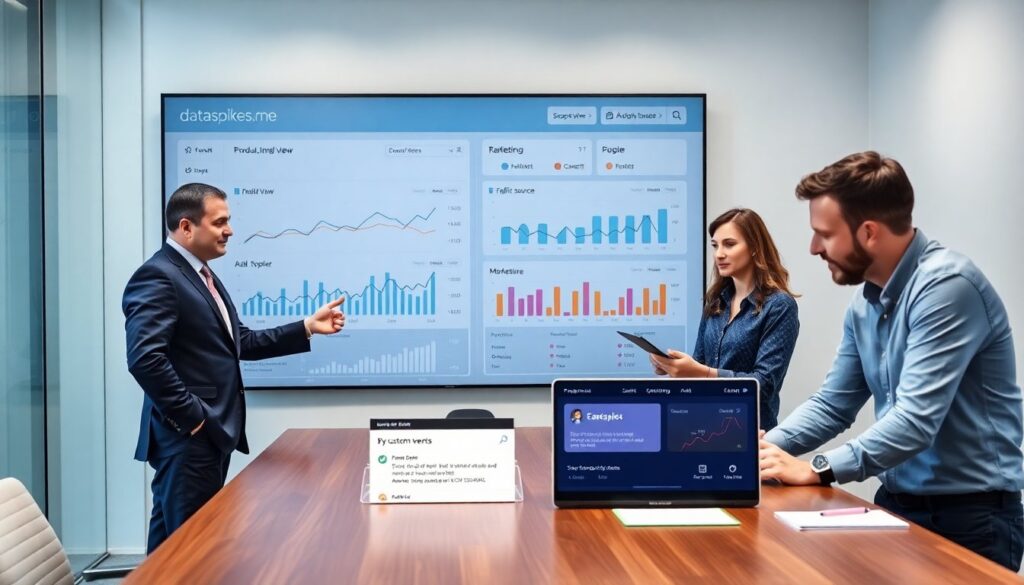
Dataspikes.me helps teams collect and act on website and user data. It tracks visitor behavior, stores events, and delivers clear reports. It offers a fast setup, privacy controls, and integrations. This guide explains what dataspikes.me is, who should use it, and how to start in 2026.
Key Takeaways
- Dataspikes.me enables teams to track user behavior and website events with fast setup and clear, actionable reports for improved decision-making.
- Its event-level detail and privacy controls make dataspikes.me ideal for marketing, product, and e-commerce teams seeking real-time insights and compliance.
- The platform supports code-free event definition, SDKs, and integrations, reducing developer effort and speeding up accurate data collection.
- Dataspikes.me helps identify conversion drop-offs, measure feature adoption, and evaluate campaign performance through detailed funnel and variant analysis.
- Security features like data encryption, consent management, and retention rules ensure that dataspikes.me respects user privacy while delivering valuable analytics.
- Getting started requires installing SDKs, defining events, setting privacy controls, and establishing integrations to quickly gain measurable results with dataspikes.me.
What Datapikes.me Is And Who It’s For
dataspikes.me collects website signals and turns them into actionable metrics. It records clicks, page views, form interactions, and conversion steps. It sends data to dashboards and to third-party tools. It stores data with configurable retention and privacy rules. It supports tags, segment rules, and custom events.
Small teams use dataspikes.me to measure feature adoption and conversion paths. Marketing teams use dataspikes.me to test messages and landing pages. Product teams use dataspikes.me to watch user flows and spot drop-off points. Agencies use dataspikes.me to report results to clients and to share targeted dashboards.
Managers choose dataspikes.me when they want simple setup and clear output. Engineers choose dataspikes.me when they want lightweight code and stable SDKs. Data analysts choose dataspikes.me when they want clean event schemas and easy exports. E-commerce owners choose dataspikes.me when they want fast insight into cart abandonment and promotion performance.
The platform fits teams that need event-level detail without heavy configuration. It fits teams that want privacy controls such as IP anonymization and consent flags. It fits teams that want to reduce vendor count by routing events to analytics, CRM, and ad platforms. It does not fit teams that need full raw log access or advanced custom modeling out of the box.
Key Features, Benefits, And Common Use Cases
dataspikes.me provides several features that speed decisions and cut waste. It offers a visual event builder that lets users define events without code. It offers SDKs for browsers, mobile apps, and server environments. It offers integrations with common tools for analytics, email, and ads. It offers export options in CSV, JSON, and direct database sync.
The main benefit of dataspikes.me lies in clear event mapping. It reduces ambiguity by enforcing naming rules and field types. It reduces developer time by providing templates and sample code. It reduces reporting lag by processing events in near real time. It helps teams act faster because dashboards show current trends.
Common use cases include funnel analysis, feature testing, and campaign measurement. For funnel analysis, dataspikes.me tracks each step and shows drop-off rates. For feature testing, dataspikes.me captures usage and compares variant metrics. For campaign measurement, dataspikes.me attributes conversions to sources and shows ROI per channel.
Teams also use dataspikes.me for monitoring site health and user experience. It logs error rates, slow page loads, and unusual traffic spikes. It tags sessions with error context so teams can reproduce issues. It alerts teams when key metrics cross thresholds.
Security and privacy sit in dataspikes.me core offering. It supports consent flags, data deletion requests, and field-level masking. It encrypts data in transit and at rest. It offers role-based access so teams share only relevant dashboards. It also supports retention rules so teams keep data only as long as they need.
Pricing models on dataspikes.me vary by event volume and retention. Teams can start with a free tier and scale as events grow. The vendor offers onboarding guides and sample event schemas. The vendor also offers consultancy for complex setups.
The platform fits many sectors, including SaaS, media sites, e-commerce, and digital agencies. SaaS companies use dataspikes.me to measure activation and churn. Media sites use dataspikes.me to measure engagement and ad viewability. E-commerce teams use dataspikes.me to measure checkout funnels and discount impact.
Setup tasks include adding the script or SDK, defining events, and mapping integrations. Teams should document event names and field definitions before they send production traffic. Teams should test events in staging and verify data accuracy in reports. Teams should enable consent settings and set retention limits to match policy.
Practical Example For English-Speaking Web Visitors
A small e-commerce team adds dataspikes.me to their site. The team installs the browser SDK and creates three events: product_view, add_to_cart, and purchase. The team sets product_id and price fields on each event.
The team builds a funnel report in dataspikes.me. The report shows product views, cart adds, and purchases by day. The team spots a large drop between add_to_cart and purchase. The team segments sessions by traffic_source and finds that paid search yields lower conversions.
The team runs a simple test. They change the checkout copy for paid-search visitors and run the test for two weeks. dataspikes.me captures the variant events and shows a modest uplift for the new copy. The team rolls the change to all visitors.
Another team uses dataspikes.me for content testing. The team tags article interactions and measures time on page. The team finds that articles with short summaries keep visitors longer. The team adjusts editorial guidelines and measures the result with dataspikes.me.
A product team uses dataspikes.me to track a new onboarding flow. The team logs each onboarding step and ties steps to new-user retention. The team spots a confusing step and simplifies the UI. dataspikes.me shows improved retention in the next 30 days.
In each example, dataspikes.me provides clear event data and quick reports. Teams act on the data and measure impact. The platform helps teams move from guesses to data-driven changes.
Getting started with dataspikes.me takes a few steps. The team signs up, follows the quickstart guide, installs the SDK, and sends test events. The team documents events and sets privacy rules. The team connects key integrations and builds the first dashboard.
These steps let English-speaking web visitors and teams get value fast with dataspikes.me. The platform delivers clear signals, simple controls, and measurable results.